

My visits to Southeast Missouri usually last less than 48 hours, so I rarely have time to do the only thing my dad really wants me to do when I’m home: ride down to the farm with him.
My dad has been wondering at the ground there and its wildlife, crops and sunsets for all his 63 years. He still treasures it. It still amazes him, and I expect it always will.
I always feel guilty when I can’t or don’t make the time to visit the farm on my trips home. My dad understands, but I know I’ll regret it when I’m back in Mississippi because the farm’s beauty never disappoints.
I made the time to go one day a couple of years ago. Dad and I slipped out of my aunt’s house as the sun began to set. Dad’s employee’s wife had seen several bald eagles earlier in the day, and Dad was hoping to see them, too. We headed west and south to our patch of ground past the map-dot town of Morehouse.
We saw them on the road that leads to our farm — the road my Dad’s dad used dynamite to clear and build and the road my mom’s dad kept level and graded for 60 years. First, we saw one bald eagle, and breathless and whispering in awe, we counted four more. As one flew away we marveled at the bird’s wingspan.
We drove on past the shop. We turned west toward the Little River levee. On the other side of the levee in an old rice field huddled thousands of snow geese — or blues and whites, as my dad explained.
I tip-toed out of the car to record with my phone the sound of thousands of geese honking in the middle of a field in swampeast Missouri. My dad said it was majestic, and I knew I’d want to remember it forever.
We turned around on the bridge and headed back east, making our way to another road that would take us to the highway.
My dad interrupted the silence.
“Laura, are those deer?”
His voice, again at that low level just above a whisper, held excitement. It’s not unusual to see deer where we were but you don’t see eight standing together very often.
We stopped and counted, and we counted again as they stood on either side of a ditch. The deer finally turned and ran for cover along the front line of trees. We could see them more clearly then as they paused for one more look at the strangers in the white truck before turning and bouncing off deeper into the woods.
We laughed at ourselves and tried to recollect if we’d seen eight or nine.
As we drove off, my dad asked if it was worth it. The trip, he meant. Was the payoff, this tremendous God-showing-off moment, worth breaking away from the chaos of my children and taking the time to ride those old gravel roads I’ve ridden a thousand times before?
I doubt he remembered then, but he had asked that question before.
Twenty-two years ago I was lifeguarding the summer away, counting the days until I left Sikeston for Ole Miss. I had one obligation to fulfill before I left: spend an afternoon with him on the gravel roads of our farm.
I put the trip off until just before I packed the last box in my bedroom, and I reluctantly climbed in the truck. We drove all around our farm and over to Mississippi County, where all his family settled decades ago.
On that day — a lifetime back then: in the truck all day, no cell phone, no contact with my boyfriend and friends — he told me the story of our family and our farm. He told me all the family secrets and the land’s history.
He told me stories about the Indians who first settled there. He told stories about the men who brought the land out of the swamp, about the trees they loaded onto rail cars with trunks as wide as the heights of the men themselves. He recalled families who lived on the land before it was our farm.
He told me about the mercantile my grandfather’s parents owned and about a blind osteopathic doctor named John Finley Lockaby who boarded in their home to help pay his debts from the store. Dr. Lockaby became a member of the family and was another father figure for my grandfather, who was named for him: Roy Finley Hough. As Lockaby’s medical practice grew, he attended land auctions and accumulated land in our corner of southeast Missouri. When he died, he left his land to my family.
During our drive my dad explained that my grandfather was a teen when Lockaby died, and by the time he was in law school, he was driving home every weekend to build the road leading from the highway to our farm. My dad, then, grew up going to the farm with his dad every chance he could. All he ever wanted to do was farm, but his dad made him get a college degree first.
On our drive all those years ago, my dad took me to old house sites on our land where he’s found enough marbles to fill several jars. We got out and kicked at the gumbo in the turnrows, land he’s walked a thousand times after a good rain when it’s ripe for finding arrowheads.
The trip all those years ago lasted a few hours. The more recent trip lasted a fraction of that time, but they’ve both stuck with me because, paraphrasing Gone With the Wind, he told me that land is the only thing that lasts.
On that first drive, I came away with a new understanding of and a deep appreciation for our farm. After that long day I was finally free to go home, call all my friends and head out for the night. As I climbed out of the truck he asked if it was worth it.
Even as an 18-year-old I understood that his rides to the farm aren’t about the farm, animals or crops at all. They are about family, sharing the majesty of God’s creation together and the memories of the people who loved it long before we did.
It was worth it. It always is.
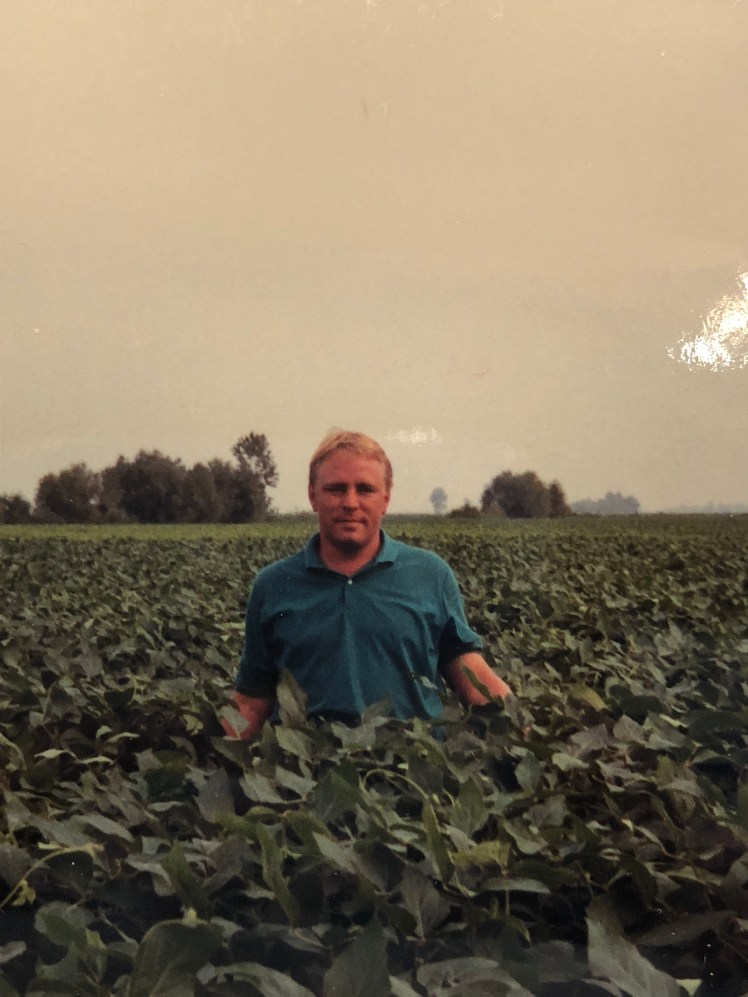
My dad in a field in the 1980s.
 laura hough smith
Such a wonderful tribute to your dad and his family. Your mother would love it and be so proud of you!!! MLC ________________________________
Thanks you so much, Mary Lynn! 😘
Thank you for sharing this with us. Have you read ( From Missouri a farmers story ) By Thad Snow a Mississippi county settler?
I haven’t heard of him, but I just looked him up! I’d love to read his work.
Oh my goodness Laura-
Tears, tears and more tears!!! What a beautiful homage to your dad and your family’s land 😊
Loved it! Jana
________________________________
Thank you so much, Jana! 😘
I have it It helps me understand a lot about my grandfather’s loss of the land they had owned an cleared after the depression . I will be happy to share it with you. Not politically correct for today.